
The biggest challenge for employers in 2025 is cutting through the noise to find the right candidates, quickly and efficiently. With every job opening attracting hundreds of job seekers, recruitment teams face overwhelming volumes, rising costs, and longer hiring cycles. The challenge isn’t just about filling job openings, it’s about connecting with suitable candidates before the competition does.
Modern recruitment methods are now essential for managing the recruitment process, improving the quality of hire, and reducing time-to-hire. This guide breaks down the top 12 methods of recruitment for employers in India, with practical tips to help you choose the right approach for every role.
What are Recruitment Methods?
Recruitment methods refer to the various approaches employers use to attract, identify, and hire potential candidates for job openings. In India’s rapidly evolving job market, selecting the right recruitment methods can make all the difference, influencing the cost, speed, and quality of your hiring process.
Today, there’s a wide range of recruitment methods available, from traditional internal recruitment to innovative external recruitment strategies. Each method brings its own strengths, whether it’s tapping into your existing workforce, leveraging job boards, or using recruitment agencies to find the most suitable candidates.
Selecting the right recruitment methods isn’t just about filling positions; it’s about building a strong employer brand, reaching the best job seekers, and staying ahead in a competitive talent market. The right mix ensures that your hiring team can connect with qualified candidates efficiently and effectively, regardless of the type of role or level of experience required.
Recruitment methods are one stage of the wider hiring cycle. For every step from workforce planning to onboarding, see the recruitment process, step by step.
Internal vs External Recruitment
Choosing the right recruitment methods starts with understanding the difference between internal and external recruitment. Each approach has unique advantages and challenges, and the best recruitment process often blends both to meet specific hiring needs.
Internal Recruitment
Internal recruitment refers to filling job openings within your existing workforce. This includes promotions, transfers, and rehiring former employees (also known as boomerang hires). It’s a popular recruitment method for several reasons:
- Faster and more cost-effective: Internal recruitment shortens the hiring process and reduces costs, since you’re already familiar with potential candidates’ skills and work culture fit.
- Boosts morale and retention: Promoting or moving current employees shows that you value their growth, encouraging loyalty and motivation.
- Lower risk: Internal candidates already understand your company culture and expectations, reducing onboarding time and performance uncertainty.
However, relying solely on internal recruitment can limit fresh perspectives and may create internal competition or politics. It’s best used for roles where company knowledge and loyalty are key.
External Recruitment
External recruitment brings in new talent from outside the organisation. This can be done through job boards, recruitment agencies, campus drives, social media, and more. External recruitment methods are essential when you need to:
- Access a broader talent pool: Attract diverse candidates with new skills, ideas, and experiences.
- Fill specialised or hard-to-hire roles: Sometimes, the right candidate simply isn’t already in your organisation.
- Drive innovation: Fresh perspectives can help your team adapt and grow in a rapidly changing market.
The trade-off? External recruitment often takes longer and can be more expensive, especially if you rely on third-party recruitment agencies or specialised job boards. But for many roles, especially those requiring new skills or leadership, it’s a necessary investment.
Blending Internal and External Recruitment
Most successful hiring teams use a mix of internal and external recruitment methods. This balanced approach helps you fill roles quickly, retain top performers, and bring in new talent to fuel growth. By understanding when to look inside and when to look outside, you can create a recruitment process that’s both efficient and future-ready.
Direct vs Indirect vs Third-Party Methods of Recruitment
Employers in India today have access to a wide range of recruitment methods, each designed to attract the most suitable candidates for their job openings. Understanding the differences between direct, indirect, and third-party recruitment methods can help you build a more effective recruitment process and reach the best potential candidates for every role.
Direct Recruitment
Direct recruitment methods involve engaging with job seekers face-to-face or through direct communication channels. These methods are especially effective for connecting with early talent and building your employer brand on campuses and in the job market.
- Campus Recruitment: One of the most popular direct recruitment methods for hiring fresh graduates and early talent. Companies visit educational institutions to conduct placement drives, interviews, and skill assessments, giving them access to a large pool of qualified candidates.
- Walk-ins: Open invitations for job seekers to visit your office and apply directly. Walk-ins are effective for filling entry-level positions quickly and attracting candidates who are actively seeking new opportunities.
- Career Fairs & Hiring Events: Participating in or hosting job fairs allows employers to meet a wide range of job applicants in person. These events are ideal for bulk hiring and for roles that require strong interpersonal skills.
Indirect Recruitment
Indirect recruitment methods focus on attracting potential candidates through mass communication channels, without direct interaction at the initial stage. These methods help employers reach a broader audience and build awareness about job openings.
- Job Advertisements: Posting job ads in newspapers, magazines, and especially on online job boards is a tried-and-tested way to attract job seekers. Online job boards like Naukri, Indeed, and LinkedIn are now essential for reaching both active and passive candidates.
- Social Media Recruitment: Sharing job postings and employer branding content on platforms like LinkedIn, Facebook, and Instagram helps companies connect with a younger, tech-savvy audience.
- Company Career Pages: Maintaining an up-to-date career page on your company website is a powerful way to attract applicants who are already interested in your brand.
Third-Party Recruitment
Third-party recruitment methods involve partnering with external organisations or professionals to source and screen candidates. These methods are often used for specialised, senior, or hard-to-fill roles.
- Recruitment Agencies: External recruitment agencies help employers find suitable candidates for niche, executive, or urgent positions. They handle the initial screening, saving your hiring team valuable time.
- Freelance Recruiters & Outsourced Solutions: For companies needing flexibility or specialised skills, freelance recruiters or outsourced hiring partners can manage the recruitment process end-to-end.
- Employment Exchanges: These are government-run platforms that connect employers with job seekers, often used for entry-level or blue-collar roles.
Each of these recruitment methods has its place in a modern hiring strategy. By combining direct, indirect, and third-party approaches, employers can ensure they reach the most suitable candidates for every type of role, while optimising for cost, speed, and quality of hire.
The 12 Modern Methods of Recruitment (When, Why, and How)
Recruitment in India is transforming rapidly, and employers need to use a mix of modern recruitment methods to find the most suitable candidates for every role. Here are the top 12 methods of recruitment for 2025, with practical guidance on when, why, and how to use each approach.
1. Employee Referrals
When to use: For mid-level roles, culture-fit positions, and when you need quick, reliable hires.
Why: Employee referrals can help your team reach candidates through existing professional networks. Review referral outcomes alongside other hiring sources.
How: Encourage your team to recommend potential candidates from their networks. Use referral bonuses and recognition to motivate participation. Integrate referral tracking into your recruitment process for transparency and speed.
2. Social Media Recruiting
When to use: To reach passive candidates, early talent, and for employer branding.
Why: Social media recruiting helps you reach potential candidates on platforms such as LinkedIn, Facebook, and Instagram. Share useful role information and show what working with your team involves.
How: Share engaging job postings, employee stories, and company culture content. Use targeted ads and direct outreach to connect with qualified candidates.
3. Job Boards
When to use: For high-volume hiring, general roles, and when you want to reach a broad pool of job seekers.
Why: Job boards like LineupX, Naukri, Indeed, and LinkedIn remain essential for advertising job openings. They provide access to thousands of active and passive job seekers.
How: Write clear, compelling job descriptions. Use filters and screening questions to manage large volumes of job applications. Refresh postings regularly to stay visible.
4. Internal Job Postings
When to use: For promoting internal mobility, filling roles quickly, and boosting employee retention.
Why: Internal recruitment gives current employees a route to new roles. Candidates already know your organisation, which can simplify onboarding.
How: Advertise job openings on your company’s internal portal or notice board. Encourage current employees to apply and provide clear criteria for selection.
5. Campus Recruitment
When to use: For hiring fresh graduates, interns, and building a future talent pipeline.
Why: Campus recruitment connects you directly with early talent from top educational institutions. It’s ideal for entry-level positions and long-term growth.
How: Partner with colleges and universities. Participate in graduate recruitment drives, conduct skill assessments, and host workshops or webinars to engage students.
6. Hiring Events & Job Fairs
When to use: For bulk hiring, brand visibility, and connecting with high-intent applicants.
Why: Job fairs and recruitment events allow direct interaction with a diverse pool of job seekers. They’re effective for roles requiring strong communication or interpersonal skills.
How: Host or participate in industry-specific job fairs. Prepare engaging presentations and on-the-spot interviews to identify suitable candidates quickly.
7. Recruitment Agencies
When to use: For urgent, senior, or hard-to-fill roles where specialised expertise is needed.
Why: Recruitment agencies provide access to pre-screened, qualified candidates. They save your hiring team time and can fill roles that are difficult to source internally.
How: Choose agencies with a strong track record in your industry. Set clear expectations and maintain regular communication to ensure alignment with your recruitment process.
8. Company Career Pages
When to use: For inbound applicants, employer branding, and ongoing hiring needs.
Why: A well-designed career page attracts job seekers already interested in your brand. It’s a cost-effective way to showcase your culture and open positions.
How: Keep your career page updated with current job openings, employee testimonials, and insights into your company culture. Make the application process simple and mobile-friendly.
9. Talent Pool Databases
When to use: For recurring roles and when you want to save time and cost on sourcing.
Why: Reusing previous job applications helps fill similar roles faster and more efficiently. However, ensure candidate data is kept current.
How: Maintain a database of past applicants and silver-medalist candidates. Reach out proactively when relevant job openings arise.
10. Boomerang Employees
When to use: For roles where prior company knowledge is valuable and onboarding time needs to be minimal.
Why: Former employees (boomerang hires) are familiar with your company culture and processes, making them quick to re-integrate.
How: Stay connected with alumni networks and maintain positive relationships with former employees. Reach out when suitable roles open up.
11. LinkedIn Outreach
When to use: For sourcing professionals directly, especially for specialised or senior roles.
Why: Direct outreach on LinkedIn allows you to target potential candidates who may not be actively job seeking but are open to new opportunities.
How: Use LinkedIn Recruiter or similar tools to search for candidates with the right skills and experience. Personalise messages to increase response rates.
12. Niche Community Hiring
When to use: For tech, design, and creative roles where specialised skills are required.
Why: Platforms like Reddit, GitHub, and Discord host communities of highly skilled professionals. Engaging with these groups helps you find candidates with unique expertise.
How: Participate in relevant forums, post job ads, and build relationships within these communities. Focus on authenticity and value to attract the best candidates.
Tips for Employers in India:
- Blend internal and external recruitment methods for best results.
- Use data from previous hiring cycles to refine your recruitment process.
- Keep candidate experience at the centre: make applications clear and avoid unnecessary steps.
- Regularly review and update your recruitment strategies to stay ahead in a fast-changing job market.
Using a blend of these recruitment methods helps employers in India reach the most suitable candidates, reduce hiring costs, and improve the overall effectiveness of their recruitment process. The right mix depends on your company’s goals, the roles you’re hiring for, and the experience you want to create for job seekers.
Comparison Table: Cost, Time & Effectiveness of Recruitment Methods
Choosing the right methods of recruitment is crucial for every hiring process. Here’s a clear comparison of the top 12 recruitment methods for employers in India, showing their cost, speed, best use case, and key risks. This table will help you select the most effective recruitment strategies for your job openings and hiring goals.
Swipe sideways to see every column.
| Methods of Recruitment | Cost | Speed | Best For | Key Risk or Limitation |
|---|---|---|---|---|
| Employee Referrals | Low | Fast | Mid-level roles, culture fit | Limited diversity, internal bias |
| Social Media Recruitment | Low-Med | Fast | Creative, tech, early talent | Low filtering, passive reach |
| Job Boards (Online) | Medium | Medium | Bulk/general hiring, multiple roles | High volume, low-quality filtering |
| Internal Job Postings | Low | Fast | Internal mobility, quick fills | Limited fresh ideas |
| Campus Recruitment | Low | Slow | Freshers, trainees, early talent | Limited experience, time-intensive |
| Hiring Events & Job Fairs | Med-High | Medium | Bulk hiring, brand visibility | Costly, logistical effort |
| Recruitment Agencies | High | Medium | Senior, niche, urgent roles | Expensive, less control |
| Company Career Pages | Low | Medium | Inbound, employer branding | Limited reach, depends on brand pull |
| Talent Pool Databases | Free | Fast | Recurring, similar roles | Data may be outdated |
| Boomerang Employees | Low | Fast | Quick onboarding, known talent | Small pool, possible past issues |
| LinkedIn Outreach | Low-Med | Medium | Specialised, senior, passive talent | Time-consuming, low response rates |
| Niche Community Hiring | Low | Medium | Tech, design, creative roles | Limited pool, hard to scale |
The best recruitment process often blends multiple recruitment methods to optimise for cost, speed, and quality, ensuring you reach the most suitable candidates for every type of job opening.
How to Choose the Right Methods of Recruitment (Decision Flowchart)
Finding the right recruitment methods for your job openings can feel overwhelming, especially with so many options available in 2025. The most effective hiring process is not about using every tool, it’s about matching the right recruitment strategies to your specific needs. Here’s a simple decision flowchart to help your hiring team select the best approach for every role.
Step 1: Define the Role and Urgency
- Is this an urgent or hard-to-fill position?
Yes: Consider recruitment agencies, employee referrals, or direct LinkedIn outreach for speed and quality.
No: Move to the next step.
Step 2: Identify the Level and Skills Required
- Is the role entry-level or early talent?
Yes: Use campus recruitment, job fairs, internal job postings, and social media recruitment. Tap into talent pool databases for recurring roles.
No: For mid-to-senior roles, explore job boards, recruitment agencies, and niche community hiring.
Step 3: Set Your Budget
- Is your recruitment budget limited?
Yes: Prioritise internal recruitment, employee referrals, company career pages, and social media channels.
No: You can add external recruitment methods like job boards, hiring events, and agencies for a broader reach.
Step 4: Consider Employer Branding and Diversity
- Do you want to boost employer brand or reach diverse candidates?
Yes: Invest in social media recruitment, job advertisements, and hiring events. Engage with niche communities and maintain an attractive career page.
No: Focus on direct recruitment methods and internal mobility.
Step 5: Evaluate the Talent Pool
- Are you looking for specialised skills or passive candidates?
Yes: Use LinkedIn outreach, niche community hiring, and third-party recruitment agencies.
No: Standard job boards, employee referrals, and internal recruitment will suffice.
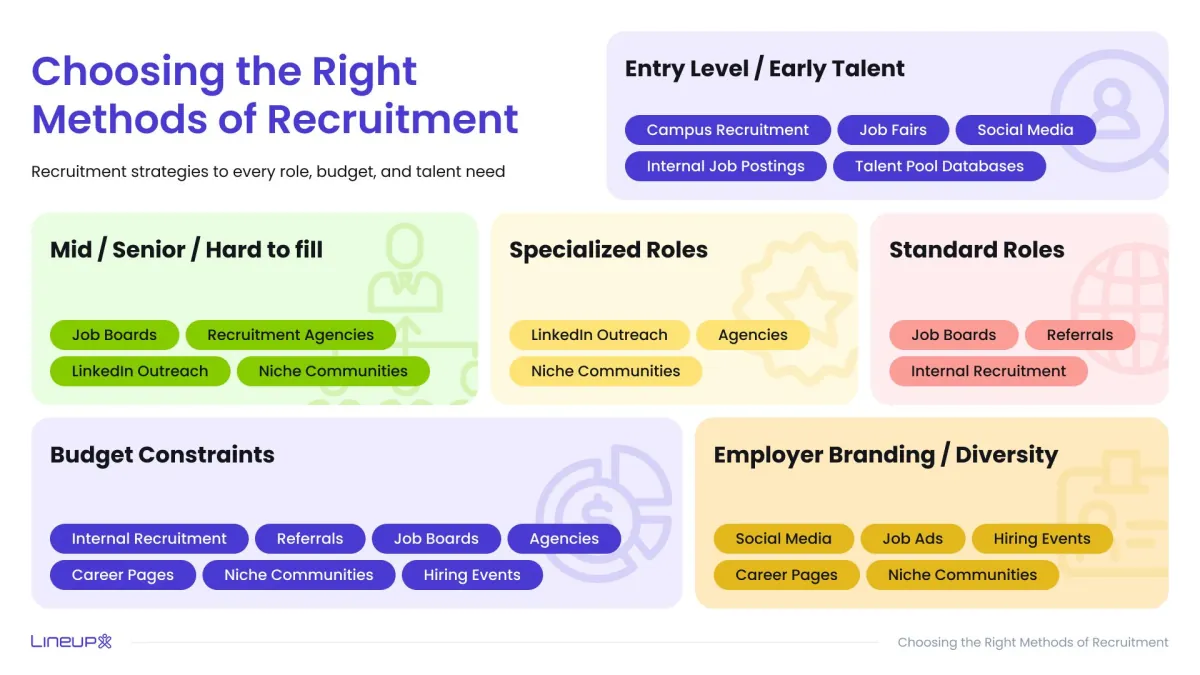
The right mix of recruitment methods ensures you attract the most suitable candidates, reduce hiring time, and build a future-ready workforce.
Tools to Power Each Recruitment Method
Modern recruitment methods are most effective when paired with the right tools and platforms. For employers in India, using technology can dramatically improve the recruitment process, making it easier to source, engage, and hire the most suitable candidates for every job opening. Here’s a breakdown of the best tools for each of the recruitment methods, along with actionable tips for your hiring team.
| Methods of Recruitment | Recommended Tools & Platforms | How They Help Employers |
|---|---|---|
| Employee Referrals | ERIN | Automate, track, and reward referrals for faster, quality hires |
| Social Media Recruitment | LinkedIn Recruiter | Reach passive and active job seekers, boost employer brand |
| Job Boards (Online) | Naukri, Indeed, Wellfound (formerly AngelList Talent), foundit (formerly Monster), LineupX | Advertise job openings, filter job applications, and manage responses |
| Internal Job Postings | Your internal careers page and applicant tracking system | Promote roles internally, track internal recruitment, boost mobility |
| Campus Recruitment | Superset, LineupX | Manage campus drives, assessments, and student engagement |
| Hiring Events & Job Fairs | Eventbrite | Organise, promote, and manage recruitment events and job fairs |
| Recruitment Agencies | Manatal | Collaborate with agencies, manage the external recruitment process |
| Company Career Pages | Workable | Create branded job boards, collect and track job applications |
| Talent Pool Databases | Lever | Build and search talent pools for recurring or similar roles |
| Boomerang Employees | Your alumni directory and applicant tracking system | Maintain alumni networks, re-engage previous employees |
| LinkedIn Outreach | LinkedIn Recruiter | Source and connect with external candidates directly |
| Niche Community Hiring | Discord, Reddit | Find and engage with specialised talent in targeted communities |
Why these tools matter:
- Automation and AI: Tools like LineupX, Manatal, and SmartRecruiters use AI to match job seekers with advertised positions, saving hours in the hiring process and increasing the quality of hire.
- ATS Integration: Applicant Tracking Systems (ATS) such as BambooHR and Greenhouse manage the recruitment process by managing job postings, job applications, and candidate communications in one place.
- Employer Branding: Platforms like LinkedIn, company career pages, and social media recruitment tools help you showcase your employer brand and attract potential candidates who are the right fit for your company culture.
- Data-Driven Decisions: Many modern tools provide analytics on recruitment methods, helping hiring managers refine their recruitment strategies and focus on what works best for each job title.
Tips for Employers:
- Use a mix of internal and external recruitment tools to reach both current employees and external candidates.
- Automate repetitive tasks like resume screening and job advertisements to free up your hiring team for more strategic work.
- Keep your job boards and talent pool databases fresh and relevant by regularly updating job descriptions and engaging with job seekers.
- Leverage alumni and referral platforms to tap into trusted networks for quality hires.
Investing in the right recruitment tools ensures your hiring process is faster, smarter, and more effective, helping you stand out in a crowded job market and secure the best candidates for every role.
Common mistakes to avoid in modern Recruitment Methods
Even with the best recruitment methods and tools, employers in India can fall into common traps that slow down the hiring process or lead to missed opportunities. Here are the top mistakes to watch out for, and how your hiring team can avoid them:
- Relying on a single method of recruitment: No one method works for every job opening. Using only job boards or only recruitment agencies limits your reach and may not deliver the most suitable candidates. Blend internal and external recruitment methods for the best results.
- Ignoring source-of-hire data: Not tracking which recruitment methods bring in your best hires means you can’t refine your recruitment strategies. Use analytics from your ATS and other platforms to understand what’s working and what’s not.
- Overlooking employer branding: Today’s job seekers, especially early talent, care deeply about company culture and reputation. If your employer brand isn’t visible on social media, job boards, and your career page, you’ll lose out to competitors who invest in branding.
- Neglecting candidate experience: A lengthy or confusing recruitment process can cause top candidates to drop out. Review your application process for unnecessary steps. Keep your hiring process clear, timely, and candidate-friendly.
- Underutilising talent pools: Past applicants and silver-medalist candidates are a goldmine for future job openings. Failing to maintain and engage your talent pool database means more time and cost spent on sourcing every time.
- Not updating job descriptions and requirements: Outdated or unclear job descriptions can attract the wrong job seekers and slow down the recruitment process. Regularly review and refresh your job ads to ensure you’re targeting the right talent.
- Skipping internal recruitment: Overlooking current employees for new roles can hurt morale and increase hiring costs. Promote internal job postings and encourage internal mobility to fill roles faster and retain top performers.
- Failing to adapt to new recruitment technologies: Review where AI and automation could reduce repeated manual work. Embrace new tools to manage your recruitment process and stay competitive.
Avoiding these mistakes will help you make the most of your recruitment methods, attract the best candidates, and build a future-ready workforce.
Conclusion: Modern Methods of Recruitment for Employers in India
Recruitment in 2025 demands a smart mix of internal and external recruitment methods. The most effective hiring teams don’t rely on just one approach; they blend employee referrals, job boards, recruitment agencies, and direct outreach to quickly and efficiently reach the most suitable candidates.
If you’re looking to hire early talent, job-ready students, or fresh graduates, LineupX can give you a real edge. Our AI-powered platform connects employers with a curated early talent pool from top academic institutions, keeps your job board fresh with relevant openings, and helps you engage candidates who are ready to contribute from day one. With LineupX, you can manage your recruitment process, boost your employer brand, and fill job openings faster, all while building lasting relationships with India’s best young talent.
Want to hire better, faster? Start with these 12 methods and let LineupX do the heavy lifting.