
Picture this, you walk into an HR interview expecting a rapid-fire list of common HR interview questions. Instead, it feels like a genuine conversation with the hiring manager. You’re not reciting answers you memorised the night before; you’re listening, thinking, and responding like yourself. The HR professional smiles, leans back, and says, “I think you’ll fit right in.”
That’s the secret most freshers miss. HR interviews aren’t auditions. They’re invitations to show who you are when you’re at your most honest, clear, and adaptable. When you prepare your mind, not just your answers, you don’t just survive the interview process, you own it.
Most blogs on HR interview questions will give you a “perfect” sample answer and tell you to memorise it. That’s exactly how you end up sounding like every other candidate they’ve met that day, which doesn’t help you stand out in the recruitment process.
This one’s different.
We’re going to teach you how to think like the HR team. Because once you know why a question is being asked, you’ll never be caught off guard again. Whether it’s about your educational background, your technical skills, or your career aspirations. You’ll also learn how to showcase your problem solving skills, highlight relevant soft skills, and reflect the company’s culture in your answers, all while sounding confident and genuine.
Before we dive into the questions…
Think of an HR round as less of a “test” and more of a decoding game. Every interview question has two layers:
- The surface layer: the words you hear.
- The hidden layer: the real intention behind the question.

Most freshers only answer the surface layer. That’s why they sound like everyone else… and get forgotten in the hiring process.
In this guide, we’ll peel back that hidden layer for each question so you’ll know:
- Why the interviewer is asking it.
- How to think in that moment to show problem solving abilities and strong communication skills.
- How to make your answer memorable, without faking anything.
So, let’s start with the top HR interview questions for freshers that set the tone for your entire job interview and might just help you land your dream job.
Q1: Tell me about yourself
What the HR is really asking
When an HR interviewer says, “Tell me about yourself,” they’re not looking for your entire life story or a word-for-word narration of your CV. Instead, they want to see if you can:
- Communicate your thoughts clearly (strong communication skills)
- Identify what’s relevant for the specific job role
- Highlight professional and educational experiences that show job-related skills
- Demonstrate that your values align with the company culture
The mindset shift you need
Think: “I’m giving them a short, engaging movie trailer of my professional journey, enough to spark interest and make them want to know more.” This isn’t about memorising a speech; it’s about telling your story in a way that feels confident, relevant, and natural.
How to structure your answer
To avoid rambling or sounding generic, use this 3-step approach:
- Present: start with where you are right now: your degree, specialisation, and any certifications or skills you’re currently building.
- Past: briefly touch on relevant experiences from internships, academic projects, part-time jobs, or extracurricular activities that highlight your technical and soft skills.
- Future: end with why you’re excited about this role and how it connects to your long-term career goals.
Sample answer for freshers
“I’m a recent Computer Science graduate with strong technical skills in Java and Python, along with proven problem-solving abilities developed through academic projects like building an AI-based attendance system. During my internships and college leadership roles, I strengthened my teamwork, adaptability, and time management skills. I’m particularly excited about this job role because your company values innovation and continuous learning, and I see it as the perfect place to grow my skills, contribute to impactful projects, and build a successful career in software development.”
Pro tip to stand out in HR interviews
This is your hook moment in the HR interview. If you make a strong impression here, it sets a positive tone for the rest of the conversation. If you lose them, every next answer will have to work twice as hard to recover.
For a full structure and sample answers for different degrees and situations, read how freshers should answer “Tell me about yourself”.
Q2: Why should we hire you?
What the HR is really asking
When hiring managers or recruiters ask this question in an HR interview, they’re not looking for a dramatic speech about your dream job.
They’re really assessing:
- Do you understand the job description and job role?
- Can you connect your technical skills, soft skills, and problem solving abilities to the company’s needs?
- Will you contribute effectively from day one?
This is your sales pitch moment, but not to “sell yourself” to everyone. Your goal is to show why you’re the right fit for this company, considering its values, culture and work environment.
The mindset shift you need
Instead of thinking: “I need this job,”
Think: “Here’s how I’ll make your work easier, solve problems, and deliver results quickly.”
It’s not about pleading for a chance. It’s about confidently matching their pain points to your strengths, showing you’re well prepared to take on new challenges and grow in your professional life.
How to structure your answer
- Show you understand the role
Mention 1 to 2 core responsibilities from the job description. - Match skills to their needs
Back them with examples from academic projects, internships, achievements, or a previous job. - Highlight fit and readiness to contribute
Show enthusiasm and explain how you can learn quickly and work with the team.
Sample answer for freshers
“From what I understand, this job role requires strong analytical skills, attention to detail, and the ability to work in fast-paced teams. During my final-year academic project, I handled data analysis for a research tool that identified user behaviour patterns and presented my findings to industry experts, which strengthened both my technical expertise and communication skills. Combined with my internship at a software firm, where I learned to adapt to a dynamic work environment and apply my problem solving skills, I believe I can contribute effectively from day one while embracing your company’s culture and opportunities for continuous learning.”
Pro tip to stand out in HR interviews
Treat the job description as your cheat sheet. Mirror their language, focus on relevant skills, and highlight the exact abilities they’re looking for. The closer your answer aligns with their needs, the more mental “yes” boxes the HR team will tick during the personal interview.
For a three-step structure and sample answers by role, read how freshers should answer “Why should we hire you?”.
Q3: What are your strengths?
What the HR is really asking
When recruiters or the HR team ask this in an HR interview, they’re not inviting you to toss random adjectives into the air. They’re silently evaluating:
- Do you know yourself and have self-awareness?
- Are your strengths relevant to the job description and job role?
- Can you prove them with real examples from academic projects, internships, or a previous job?
Your answer gives hiring managers a rough idea of how your soft skills, technical skills, and problem solving abilities will fit into their company’s culture and help you contribute effectively.
The mindset shift you need
Skip the cliché “I’m hardworking and a quick learner.” Instead:
- Name a strength.
- Prove it in action with a specific scenario.
- Show measurable impact, even small wins make you credible.
Self-awareness plus evidence is what wins in the interview process.
How to structure your answer
- Pick 2 to 3 strengths that match the role
Scan the job description for the skills they value. - Back each strength with a specific example
Draw from college projects, internships, or your professional background. - Show impact
Explain how your actions created a positive outcome in a project or work environment.
Sample answer for freshers
“Two of my key strengths are problem solving and adaptability. During my internship with a small analytics team, I fixed a data import issue that was delaying reports. I researched solutions, tested scripts, and implemented a fix in one day, reducing a week-long delay to just 24 hours. I also adapted quickly to new tools like Power BI and Jira during academic projects, which improved my time management skills and helped my team meet tight deadlines.”
Pro tip to stand out in HR interviews
Avoid the “laundry list” trap. Two or three well-explained strengths, supported by examples, will leave a stronger impression than rattling off a list of generic qualities. Tie them back to the company’s values and team culture so the person interviewing you can clearly see your suitability for the role.
For a longer list of strengths with proof lines and sample answers, read strengths and weaknesses for freshers.
Q4: What is your biggest weakness?
What the HR is really asking
When you face this HR interview question for freshers, the recruiter isn’t trying to embarrass you, they’re assessing qualities that matter for your long-term career growth. Specifically, they want to see:
- Self-awareness: do you recognise your own areas for improvement?
- Accountability: can you take ownership of your mistakes without excuses?
- Growth mindset: are you actively learning and improving?
- Job relevance: will your weakness affect your ability to perform well in the role?
In 2025, recruiters are increasingly prioritising soft skills like adaptability and self-improvement alongside technical knowledge. This question is your chance to show that you’re not just aware of your weaknesses but also proactive in addressing them.
The mindset shift you need
Many fresh graduates make the mistake of masking a strength as a weakness (“I work too hard” or “I’m a perfectionist”). While these sound safe, they’re overused and make your answer feel scripted.
How to structure your answer
- Pick a genuine but non-critical weakness: something that won’t hinder your core responsibilities.
- Acknowledge it honestly: no exaggeration, no self-bashing.
- Share the steps you’re taking: show you’re committed to improvement.
- Highlight measurable progress: give a short example or achievement.
This makes you come across as honest, self-aware, and coachable, qualities recruiters value in entry-level candidates.
Sample answer for freshers
“In the past, I struggled with public speaking, which sometimes made me nervous during presentations. I realised this could affect my professional growth, so I took steps to improve. I volunteered for project reviews during my final year of college and joined a local speaking club to practise regularly. Over time, I became more confident, even receiving positive feedback from my professor after a group presentation. I’m still working on it, but I’ve made noticeable progress and now feel comfortable sharing ideas in team settings.”
Pro tip to stand out in HR interviews
Use the formula: Weakness → Effort → Progress.
This way, your answer sounds genuine, shows your willingness to learn, and positions you as someone ready to grow in a first job or fresher role. Remember, HR interviews are less about “flawless” candidates and more about finding people who can adapt, learn, and thrive.
For honest weaknesses with an improvement plan for each, see our guide to strengths and weaknesses for freshers.
Q5: Why do you want to work here?
What the HR is really asking
When an HR interviewer asks this question, they’re not just making small talk, they’re trying to understand:
- Have you done proper research about the company before applying for the job interview?
- Is this role just a stepping stone, or do you see it as a place to build your career?
- Will you stay engaged and motivated in this work environment?
- Do your personal values, career goals, and skills align with the company’s mission and work culture?
For freshers, this is one of the most common HR interview questions, and it’s where recruiters separate candidates who simply want any job from those who genuinely want this job role.
The mindset shift you need
Avoid giving vague, generic answers like: “It’s a great company and I’d like to work here.” This shows no research and no personal connection. Instead:
- Link your career aspirations with the company’s work, projects, or culture.
- Mention something specific from your research, it could be their recent product launch, CSR activities, campus initiatives, or industry reputation.
- Show that you understand their values and see yourself contributing meaningfully to the organisation.
How to structure your answer
- Show research → Mention specific details about their projects, work culture, achievements, or community efforts.
- Connect to your values/skills → Relate why their work excites you personally and professionally.
- Highlight mutual benefit → Explain how you’ll contribute to their success while also growing in your career.
Sample answer for freshers
“I’ve been following your company’s campus programmes and noticed how you actively mentor freshers into leadership roles. That commitment to professional growth resonates with me because I strongly value continuous learning and skill development. With my academic background in software development and experience in collaborative projects, I believe I can contribute to your upcoming app development initiatives while learning from your expert team. This job role offers the perfect balance of challenge, learning, and career growth, making it an ideal next step in my professional journey.”
Pro tip to stand out in HR interviews
Before your job interview, go through the company’s website, recent press releases, LinkedIn updates, or CSR reports. Referencing their current work shows genuine interest and sets you apart from other candidates in the hiring process. This level of preparation instantly positions you as a motivated and informed applicant, a big plus for freshers entering the workforce.
Q6: Where do you see yourself in 5 years?
What the HR is really asking
When HR asks this, they’re assessing:
- Career direction: do you have clear goals?
- Commitment: will you stay long enough for the company to invest in you?
- Alignment: are your career aspirations realistic and compatible with the role?
They’re not asking you to predict your entire future, they want to see if you’re goal-oriented, adaptable, and motivated to grow.
The mindset shift you need
- Saying “I want to be the CEO” as a fresher sounds unrealistic.
- Saying “I haven’t thought about it” makes you appear careless.
The right balance? Show ambition that fits the company’s growth path while staying open to learning and new opportunities.
How to structure your answer
- Show a clear vision: focus on a skill set, expertise, or responsibility you want to develop.
- Link it to the company: show how their resources, mentorship, or projects can help you achieve it.
- Stay adaptable: mention you’re open to exploring new challenges as you grow.
Sample answer for freshers
“In 5 years, I see myself as a skilled project manager, leading a small team and managing projects from concept to delivery. This fresher role is an ideal starting point because it offers exposure to both client interaction and technical problem-solving, skills that are essential for my long-term career growth. I understand that career paths evolve, so while this is my current vision, I’m open to exploring other roles within the company where I can create value.”
Pro tip to stand out in HR interviews
Avoid answers focused only on job titles or promotions. Instead, highlight the skills you’ll develop and the impact you’ll create. It shows maturity, ambition, and a long-term mindset.
Q7: Tell me about a time you failed
What the HR is really asking
When you hear this HR interview question, it might feel like a trap, but it’s actually a test of professional maturity. Recruiters aren’t trying to dig into your flaws, they’re checking three important traits:
- Accountability: can you take ownership of your actions, even when things go wrong?
- Resilience: do you recover quickly from setbacks or let them derail you?
- Growth mindset: will you learn from your mistakes and avoid repeating them in your future work?
In job interviews, especially for freshers, this question helps employers understand if you can handle workplace challenges with grace and turn setbacks into valuable lessons.
The mindset shift you need
Failure itself isn’t a career-killer. Ignoring the lesson from that failure is.
The strongest answers keep a healthy ratio:
- 20% describing the failure (brief and factual, no drama)
- 80% focusing on the solution, the learning, and how it changed your approach
This way, you highlight your problem-solving ability, critical thinking, and readiness for the job rather than leaving the recruiter stuck on the negative.
How to structure your answer
To craft a confident and impactful response:
- Choose a safe, genuine example: avoid failures that suggest a lack of integrity or basic competence. Opt for something from your academic or early project experience.
- Take clear responsibility: avoid language that shifts blame to others. Own your role in the situation.
- Highlight corrective action: show how you fixed or mitigated the issue at the time.
- Show how you applied the learning: link the lesson directly to skills relevant to the job description.
Sample answer for freshers
“In my second year of college, I volunteered to lead the organising team for our annual cultural fest. I underestimated the budget for key activities, and just a week before the event, we discovered a significant funding shortfall. I took responsibility and worked with my team to approach local sponsors at the last minute. While we managed to secure the funds and execute the event successfully, the process was far more stressful than it needed to be. The experience taught me the importance of accurate planning, setting financial buffers, and anticipating potential risks. Since then, I’ve applied these principles in every project I’ve handled, double-checking budgets, building contingency plans, and communicating proactively with stakeholders. I believe these skills will help me deliver well-organised, risk-free results in this role.”
Pro tip to stand out in HR interviews
When answering this type of HR interview question, always tie your learning back to the role you’re applying for. If the company values precision, highlight how your experience improved your attention to detail. If the job calls for leadership, show how you’ve become better at guiding teams through challenges. This transforms a potential weakness into evidence of your growth mindset, something every recruiter appreciates.
Q8: How do you handle criticism?
What the HR is really asking
This HR interview question is less about the criticism itself and more about how you react to feedback in the workplace. Recruiters are silently evaluating:
- Can you take feedback without getting defensive?
- Will you implement suggestions to improve performance?
- Are you easy to work with under pressure and open to coaching?
A candidate who resists feedback often becomes a management challenge. On the other hand, someone who treats criticism as a learning tool is seen as adaptable, resilient, and coachable, all highly valued qualities in a professional setting.
The mindset shift you need
Think of criticism not as a personal attack, but as free consulting advice from someone invested in your growth. The HR interviewer wants to know if you can:
- Listen with an open mind
- Process and evaluate the feedback objectively
- Apply it to improve your work in the future
This mindset shows emotional maturity and positions you as a team player who thrives in collaborative work environments.
How to structure your answer
To make your answer stand out in a job interview, follow these steps:
- Acknowledge the Value of Feedback
Show that you understand how constructive criticism can accelerate professional growth. - Share a Specific Example
Pick a real-life scenario where feedback helped you improve your performance, this proves you don’t just “accept” criticism, you act on it. - Demonstrate Emotional Maturity
Highlight how you stayed calm and professional, even if the feedback was unexpected. - Link it to the Job Role
End by connecting your openness to feedback to the skills and qualities required for this position.
Sample answer for freshers
“In my final semester project, my professor pointed out that my presentation was too technical for the audience and lacked clarity. Instead of feeling discouraged, I asked for specific suggestions on how to make it more engaging. I simplified my language, added visuals, and practised with non-technical peers for feedback. In the next review, my presentation was praised for being clear and audience-friendly. That experience taught me that constructive criticism is a powerful tool for improvement, and I now actively seek feedback to refine my work. I believe this approach will help me adapt quickly and deliver high-quality results in this role.”
Pro tip to stand out in HR interviews
If you can show that you actively seek feedback, not just tolerate it, you’ll position yourself as someone who is self-aware, adaptable, and committed to continuous learning. In competitive job markets, this is exactly the kind of professional HR managers want to hire.
Q9: Do You Prefer Working in a Team or Alone?
What the HR is really asking
This HR interview question is designed to check your adaptability, teamwork skills, and independent work capabilities. Recruiters want to know:
- Can you collaborate without ego and contribute to a shared goal?
- Will you still deliver results independently without constant supervision?
- Are you flexible enough to adapt to different work environments?
Saying you only work well in a team or only alone can make you seem rigid. Employers value professionals who can do both, because modern workplaces demand it.
The mindset shift you need
Think of this question as an opportunity to show balance.
Teamwork is where ideas grow through collaboration, while independent work is where focus and execution shine. The best employees know when to switch between the two for maximum productivity.
How to structure your answer
- Acknowledge both styles: show that you see value in teamwork and solo work.
- Give contrasting examples: share one situation where you succeeded in a group and one where you excelled independently.
- Highlight adaptability: emphasise that you adjust based on the project’s needs.
- Link to the job role: tie your adaptability back to how it benefits the company.
Sample answer for freshers
“I enjoy working in a team because it brings diverse perspectives and sparks creative problem-solving. For example, during our college hackathon, my team’s brainstorming sessions helped us design a solution none of us could have built alone.
At the same time, I’m comfortable working independently when deep focus is required, like when I handled the entire backend coding for my final-year project.
I believe adaptability is key: knowing when to collaborate for innovation and when to work solo for precision. In this role, I’ll bring that flexibility to ensure tasks are handled in the most efficient way possible, whether it’s as part of a team or independently.”
Pro tip to stand out in HR interviews
When answering HR interview questions like this, avoid picking sides. Show that you value collaboration, independent thinking, and adaptability, qualities that make you a valuable team player and a reliable self-starter.
Q10: What motivates you?
What the HR is really asking
They’re trying to figure out:
- “Will this person stay engaged in the role?”
- “Do their motivators align with what the job can offer?”
- “Are they driven by healthy, sustainable factors, not just salary?”
An HR interview isn’t just about skills; it’s about predicting your long-term fit and workplace engagement. Employers prefer candidates motivated by growth, learning, collaboration, and impact, because these drivers keep performance high even when the work gets challenging.
The mindset shift you need
If your motivator doesn’t connect to the nature of the job, your answer will feel disjointed.
For example: If you’re applying for a software development role and say, “I’m motivated by public speaking,” it won’t resonate.
Instead, identify what energises you that also aligns with the role and industry:
- For technical jobs → problem-solving, innovation, efficiency
- For creative roles → storytelling, design, audience impact
- For client-facing roles → relationship-building, delivering solutions, customer satisfaction
Your goal is to make HR think: “Yes, this person will thrive in our environment.”
How to structure your answer
- Pick motivators that the job can realistically offer. (If the company focuses on innovation, talk about your drive to solve complex problems.)
- Use a real example from your academics, internships, or personal projects to make it credible.
- Show long-term consistency: that this motivation isn’t just a passing phase but a core part of how you work.
Sample answer for freshers
“What motivates me most is solving problems that create a tangible impact. In my final-year project, our team developed a low-cost IoT-based device for rural water monitoring. Knowing that our work could help improve water access for remote communities kept me engaged for months, even when the technical challenges were tough.
In any role, I’m motivated when I can apply my skills to meaningful work, see real-world results, and keep learning along the way. That’s the kind of environment where I give my best.”
Pro tip to stand out in HR interviews
If you can connect your motivator to value creation for the company, you signal that you’re not just looking for a paycheck, you’re looking to contribute meaningfully. Bonus points if you can show that this motivation has already driven you to go above and beyond in past projects or internships.
Domain-specific HR questions
Once HR feels confident about you as a person, they often move to field-specific questions, whether it’s coding, design, marketing, or finance. These aren’t to trip you up; they’re simply a “reality check” to see if you can apply your skills to real-world situations.
IT & Software HR questions (For freshers)
When you’re interviewing for your first IT or software job, HR isn’t only testing your coding knowledge, they’re also evaluating how you think, communicate, and adapt in a fast-changing tech world.
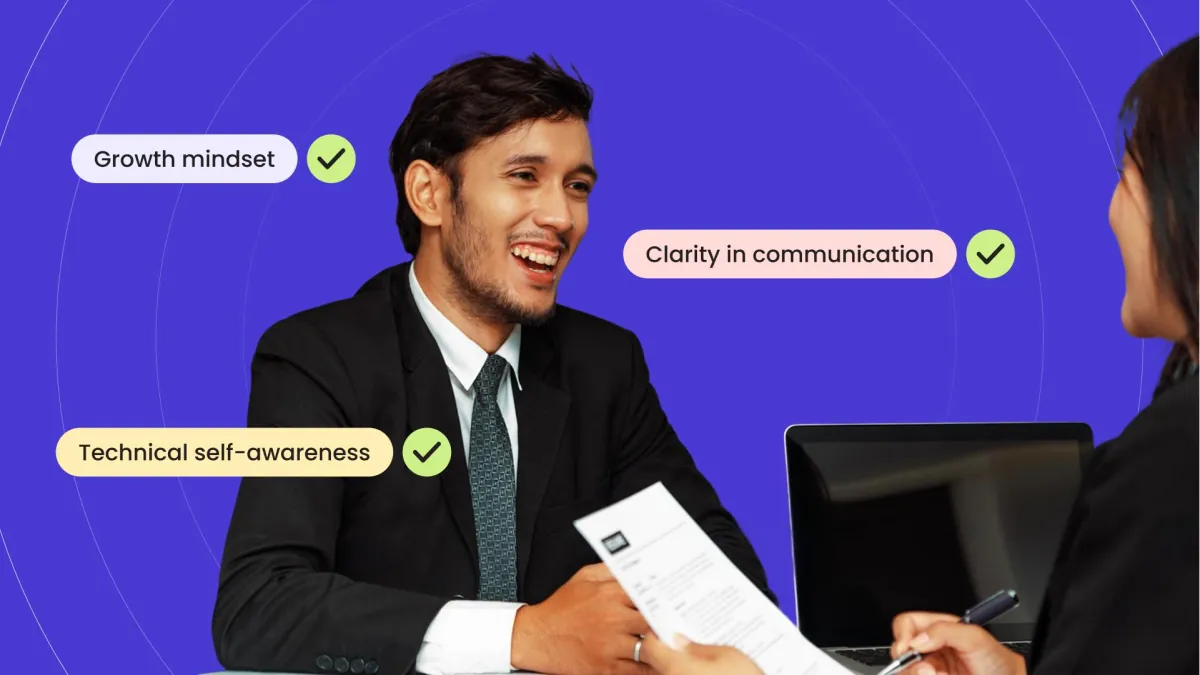
What HR is really checking for
- Technical self-awareness: do you truly understand your skills, or are you just repeating tech buzzwords from your resume?
- Clarity in communication: can you explain complex technical concepts simply to someone without a tech background?
- Growth mindset: are you keeping pace with new tools, languages, and frameworks in a rapidly evolving industry?
The goal is to show that you’re technically competent, eager to learn, and easy to work with.
Sample IT & Software HR Interview Questions & How to Answer Them
Q1. How do you keep your tech skills updated?
Psychology:
They want to see if you’re proactive about learning beyond your college syllabus. In IT, skills get outdated quickly. They’re checking whether you take ownership of your professional growth.
Sample answer:
“I combine structured learning with practical application. For example, I recently completed a cloud computing course on Coursera and immediately applied the concepts by building a small deployment pipeline to test real-world scenarios. This way, I not only learn faster but also retain concepts through practice.”
2. What’s one project that taught you something unexpected?
Psychology:
They’re testing your problem-solving depth and whether you can reflect on lessons learned, even from challenges outside pure coding.
Sample answer:
“In college, I developed an attendance tracking app. Surprisingly, the toughest challenge wasn’t coding but designing a UI that non-technical users could navigate easily. This experience taught me the importance of user empathy and feedback loops, a skill I now apply in every project.”
3. Backend or frontend, what excites you more and why?
Psychology:
They’re looking for self-awareness and the ability to justify your preference logically. There’s no “right” answer, they just want to see your reasoning.
Sample answer:
“I’m drawn to backend development because I enjoy logical problem-solving, data structuring, and system efficiency. That said, my experience with frontend work has taught me how backend choices impact the user experience, so I approach backend design with end-users in mind.”
4. What’s your understanding of clean code?
Psychology:
They want to know if you value maintainability, teamwork, and long-term efficiency over quick fixes.
Sample answer:
“For me, clean code means writing software that’s readable, maintainable, and scalable. That includes meaningful variable names, modular structures, consistent formatting, and comments where logic might be unclear. The goal is to ensure that even if I’m not around, another developer can easily understand and improve the code.”
Pro Tip for IT Freshers:
In an HR interview for software jobs, your answers should combine technical credibility with soft skills like communication and adaptability. Recruiters hire freshers who learn fast, solve problems, and work well in teams, not just those who know the latest frameworks.
Management & Business HR Questions
What HR is really checking for
- Leadership mindset: do you naturally take initiative, influence outcomes, and inspire others, even without a formal title?
- Decision-making clarity: can you make logical, well-structured choices and clearly explain your reasoning?
- Stakeholder management: can you work effectively with different people, priorities, and interests while keeping the bigger picture in focus?
In management and business HR interviews, employers aren’t just looking at your qualifications, they’re assessing your soft skills, strategic thinking, and ability to navigate complex scenarios. They want to know if you can adapt, communicate, and lead in dynamic work environments.
Sample management & business HR questions and how to answer them
1. Tell me about a time you led without being the official leader.
Psychology: HR wants to identify genuine leadership skills, how you step up, coordinate, and inspire others in the absence of formal authority.
Sample answer:
“In my college project team, our designated leader fell sick a week before the final submission. I quickly took the initiative to coordinate task allocations, set up daily progress check-ins, and ensure everyone had the resources they needed. I focused on supporting my teammates, encouraging collaboration, and keeping morale high, rather than simply taking control. This approach helped us meet the deadline without compromising quality.”
2. How do you handle conflicting priorities from multiple stakeholders?
Psychology: They’re evaluating your ability to balance competing demands, negotiate effectively, and maintain professional relationships.
Sample answer:
“During a college fest, I worked simultaneously on the sponsorship team and the event management committee. Both had critical, overlapping deadlines. I first clarified each team’s top priorities, then created a shared timeline that addressed the most urgent tasks for both sides. I also kept both teams updated on progress, which built trust and avoided last-minute surprises. This ensured smooth coordination and successful outcomes for both roles.”
3. Describe a business decision you made using data.
Psychology: They want to know if you can use data-driven decision-making instead of relying solely on intuition.
Sample answer:
“In a marketing competition, our team had to select the best city for a product launch. I gathered and analysed search trend reports, footfall statistics from similar events, and audience demographic data. Based on these insights, we selected a tier-2 city that showed high demand and low competition. The result was a record-breaking turnout, exceeding participation numbers from larger cities.”
4. How do you motivate a team under pressure?
Psychology: HR wants to see if you can maintain focus, positivity, and productivity in high-pressure environments, a must-have for leadership roles.
Sample answer:
“While organising our department’s annual cultural event, a major performance was cancelled at the last minute. I gathered the team, shifted our focus to actionable solutions, and quickly reorganised the schedule. By acknowledging everyone’s contributions and celebrating small wins, we kept the energy high. The event went on, and the audience hardly noticed the change.”
Pro tip for management freshers:
For management-focused roles, always structure your answers using the STAR method (Situation, Task, Action, Result). This ensures your stories are clear, concise, and demonstrate both your problem-solving skills and leadership potential.
Finance and accounting HR questions for freshers
If you’re appearing for a finance or accounts HR interview as a fresher, expect questions that go beyond just your textbook knowledge. HR interviewers want to see how you think, how you connect numbers to real-world business decisions, and whether you have the right mindset to handle financial responsibilities.
What HR is really checking for
- Numerical Comfort: are you confident with numbers, basic calculations, and interpreting data in a clear way?
- Fundamental Knowledge: do you understand core accounting and finance concepts from your coursework, internships, or projects?
- Ethics & Accuracy: can you be trusted to handle sensitive financial information with integrity and precision?
- Business Awareness: do you connect financial figures to business outcomes and decision-making?
Sample finance HR questions and how to answer them
Q1. Why did you choose finance/accounts as your career path?
Psychology:
They want to know if your choice comes from genuine interest, aptitude, and passion, or if you’re simply following your degree path without real motivation.
Sample answer:
“I’ve always been drawn to numbers and the way they can tell the story of a business. During my final year, I worked on a project analysing a company’s financial statements over three years. It fascinated me to see how small shifts in expenses or revenue could change overall profitability. That experience showed me that finance is not just about calculations, it’s about interpreting data to make better business decisions. I realised I could combine my analytical skills with my curiosity about how businesses work, which is why I’m committed to building a career in finance/accounts.”
Q2. How would you check if there’s an error in a financial statement?
Psychology:
Logical thinking, a systematic problem-solving approach, and accuracy under pressure.
Sample answer:
“I would start by verifying all calculations, checking totals, sub-totals, and balances. Then, I’d confirm that transactions comply with accounting principles and that debits and credits are in balance. If the error persists, I’d cross-check entries against invoices, receipts, and bank statements. In my college accounting project, we once found a mismatch because an expense was entered in the wrong ledger. That taught me that errors can be both numerical and classification-related, so thorough checking is essential.”
Q3. If you had to make a budget for your college event, how would you go about it?
What HR is really looking for:
Planning skills, prioritisation, and the ability to balance creativity with financial discipline.
Sample answer:
“I would begin by listing all possible expenses, venue, refreshments, printing, marketing, and activity-specific costs. Then, I’d allocate budgets based on available funds and priorities. For example, if the event aims to impress industry guests, I’d invest more in a good venue and branding. I’d also keep a contingency fund of 5 to 10% for unexpected costs. During my college cultural fest, I applied a similar approach and successfully stayed within budget while ensuring all important elements were covered.”
Q4. Why do you think ethics is important in finance?
What HR is really looking for:
Responsibility, trustworthiness, and awareness of the impact of unethical practices.
Sample answer:
“Finance involves handling sensitive information and making decisions that affect employees, customers, investors, and the company’s reputation. Even a small unethical act, like misreporting figures, can cause legal issues, loss of trust, and financial harm. For me, ethics means being honest, transparent, and compliant with regulations, even when it’s difficult. During a group project, I insisted on properly citing all financial data sources, even though it took extra time. That reinforced my belief that integrity is non-negotiable in this field.”
Pro Tip for finance freshers:
When preparing for finance HR interview questions, don’t just memorise definitions. Practise connecting concepts to real examples from your college projects, internships, or even personal experiences, this makes your answers sound natural, confident, and convincing.
3 Interview “Good Habits” That Are Actually Red Flags for Freshers
Many freshers walk into HR interviews trying to “impress”, but end up doing the exact opposite. Here are three habits you might think are helping you get hired, but could be silently moving you out of the shortlist.
1. Word-for-word prepared answers
You think: “If I memorise my answers, I’ll sound confident.”
Recruiter hears: “They can’t think for themselves.”
Better approach: Prepare your talking points, but avoid reciting them like a script. HR interviews are meant to be conversations, not rehearsals. Speak naturally, respond to the actual question, and let your personality come through, recruiters want to see how you think, not how well you memorise.
2. Overstating your strengths
You think: “Confidence will make me stand out.”
Recruiter hears: “This candidate may not handle feedback well.”
Better approach: Instead of just stating “I’m a great leader” or “I’m very hard-working,” share short examples from college projects, internships, or volunteer work that prove it. Freshers who show they’re confident and open to learning score higher in HR interviews.
3. Acting over-professional
You think: “The more formal I am, the more serious I’ll look.”
Recruiter hears: “They might not fit into the team culture.”
Better approach: Politeness is essential, but don’t hide your real personality behind a corporate mask. Smile, engage, and show enthusiasm. Recruiters often hire freshers for their potential, energy, and cultural fit, not just their skills.
The takeaway: In job interviews, balance is everything. Too polished can feel fake, too casual can feel careless. The goal? Be genuine, well-prepared, and adaptable, that’s what turns an HR interview into a job offer.
Don’t memorise answers. Instead, train your thinking.
The biggest hiring myth? That hiring managers want someone who answers everything perfectly from a script. In reality, for HR interview questions for freshers they prefer candidates who:
- think clearly under pressure,
- know their blind spots, and
- adapt mid-conversation.
Memorising answers makes you sound rehearsed. Real HR interviews are full of curveballs and that’s where raw thinking, problem solving skills, and communication skills show up.
How to build a thinking-first mindset (practical, fresher-friendly)
- Swap “scripts” for mental frameworks
Don’t memorise full responses. Keep 3 to 4 flexible blueprints you can map any question onto. Useful frameworks:
- STAR (Situation → Task → Action → Result) - great for behavioural HR interview questions.
- Problem → Action → Result - quick and practical for technical or project stories.
- Strength → Example → Learning - handy for questions about strengths or weaknesses.
These let you craft a clean sample answer on the fly while showing soft skills and clarity.
- Simulate messy interviews
Ask a friend to interrupt or change the question mid-answer. Practise pivoting: keep your core point, then adjust. Freshers HR interview questions often test how you respond to pressure, this trains that muscle. - Get feedback from non-technical listeners
People outside your field spot things recruiters notice: filler words, rushed tone, or unclear structure. Their feedback improves your communication skills faster than technical-only critique. - Pause on purpose
A two-second pause after a tricky question signals thinking, not panic. It improves answer structure and shows confidence, a small habit that hiring managers notice. - Journal after every mock or real interview
Right after, jot down: one question you nailed, one you can improve, one thing you learned about yourself. That builds self-awareness and accelerates growth far better than endless rote practice.
Why this works for freshers
Interview prep isn’t about sounding perfect, it’s about being a fast, adaptable thinker HR can trust in the interview process. When you show authentic reasoning, clear problem solving abilities, and calm communication, you stand out from candidates who only recite memorised lines.
Conclusion
Mindset over scripts
Stop chasing the “right” answer. Train frameworks, practise messy reality, and build self-awareness. Walk in to connect, not to perform. That’s how freshers turn HR interview conversations into offers.